DeployR02
Install Ollama
A source-based path from a versioned installer to a local API response, with a separate check for where the model actually runs.
Updated 17 Oct 2026 Read guide →
TOOLS & GUIDES
Task guides and browser-local tools. No server or model action is triggered here.
A source-based path from a versioned installer to a local API response, with a separate check for where the model actually runs.
Keep CPU, Metal and CUDA builds separate, pin the source, and inspect placement before making an acceleration claim.
Separate a local endpoint, disabled cloud features and a genuinely offline workflow. Verify each boundary.
An explicit, editable memory budget for conventional transformer KV caches. Unknown inputs stay unknown.
A symptom-to-check decision tool that preserves the error, changes one condition, and asks for a regression check.
A credential-free checklist for architecture, artifacts, capacity and recovery before an experiment is scheduled.
A source and license workflow for original weights, community conversions and runtime-specific model identities.
Original links, pinned source identity, dated reading notes and honest comparison boundaries.
EVIDENCE EXPLAINED / 18 OCT 2026
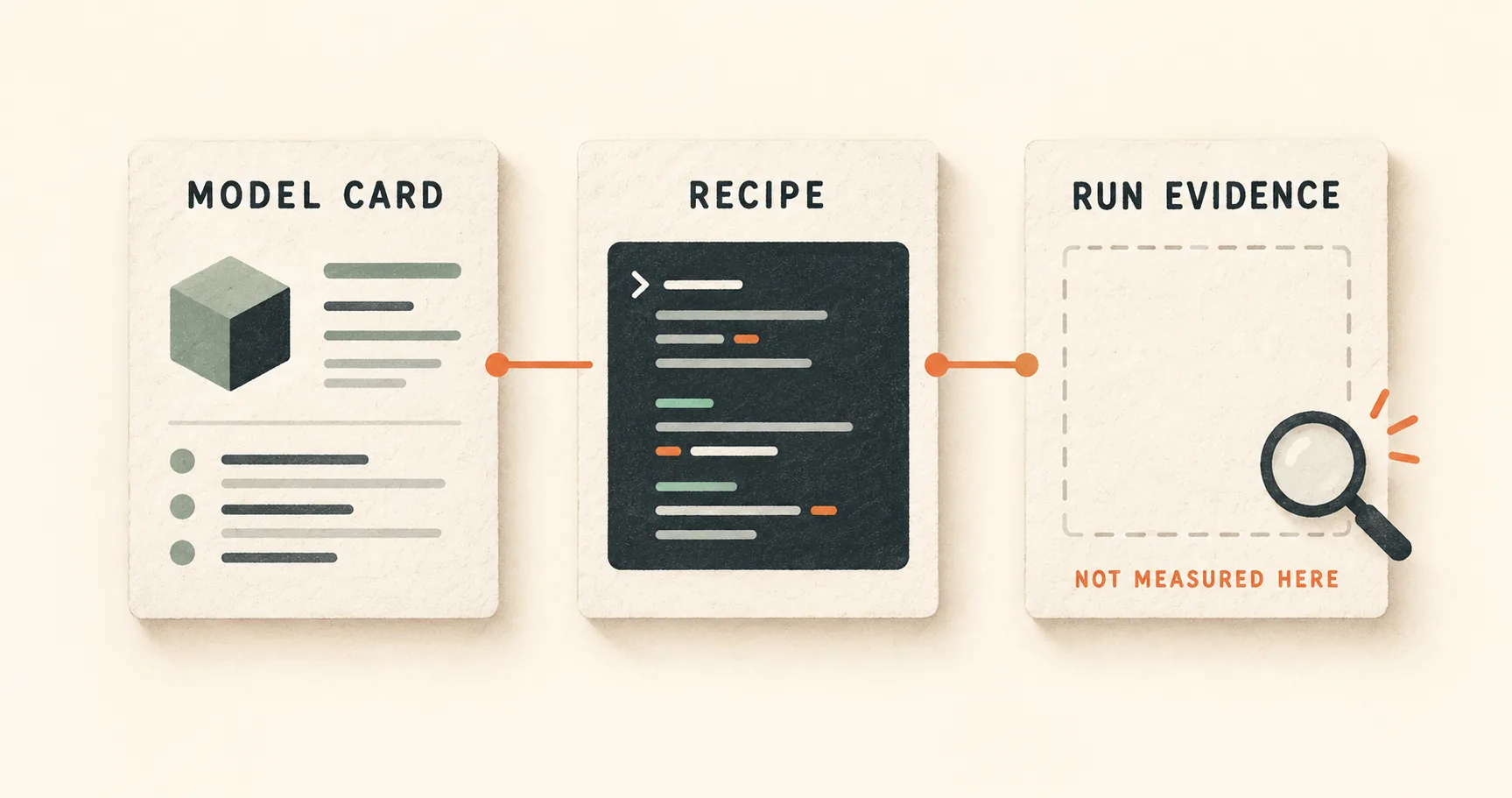
Original source facts, practical interpretation and explicit missing evidence.
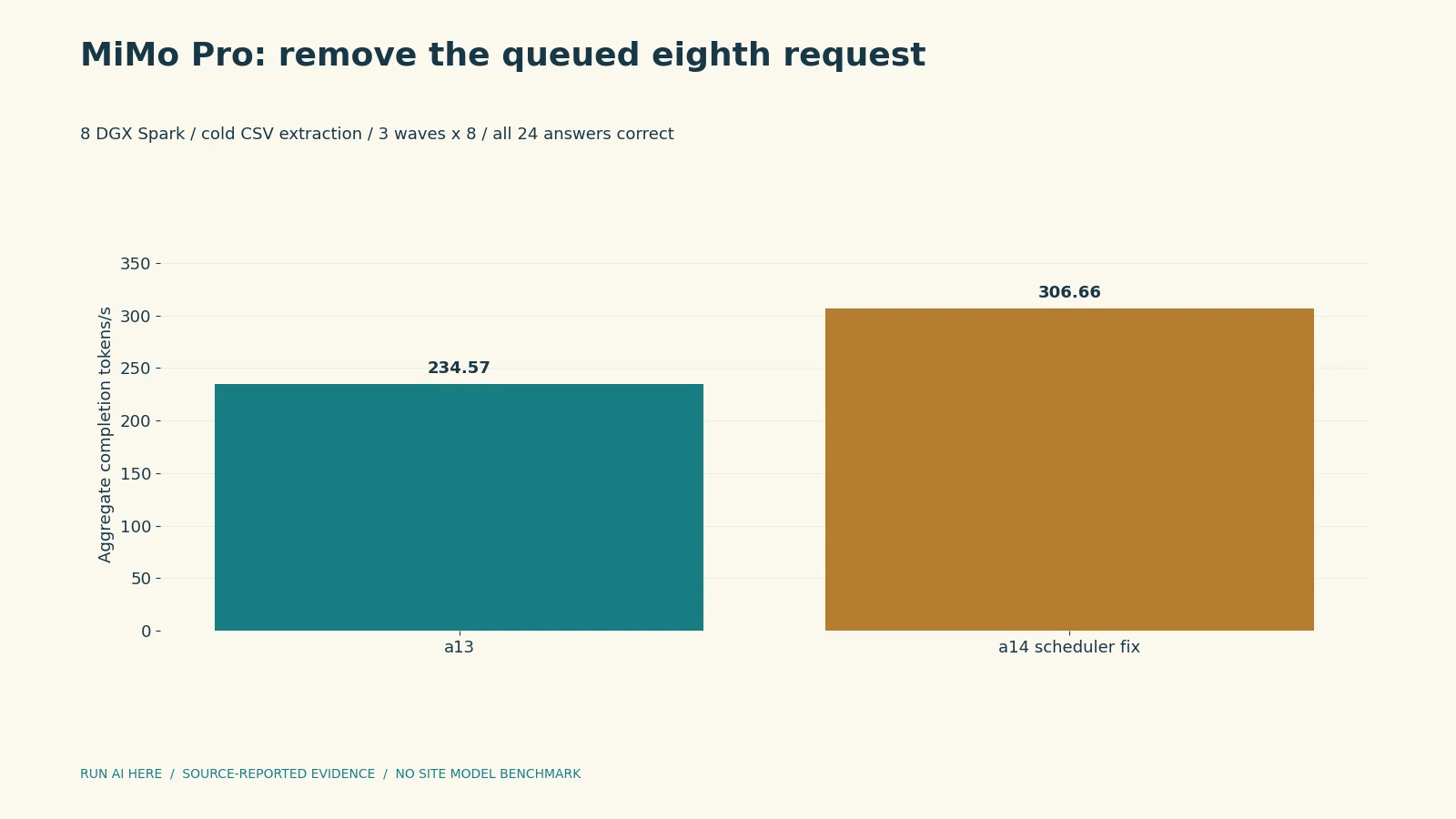
Read a13/a14 cold extraction logs, the queued eighth-request fix, full model/base-engine pins, a GSM8K subset and older-build needle checks.
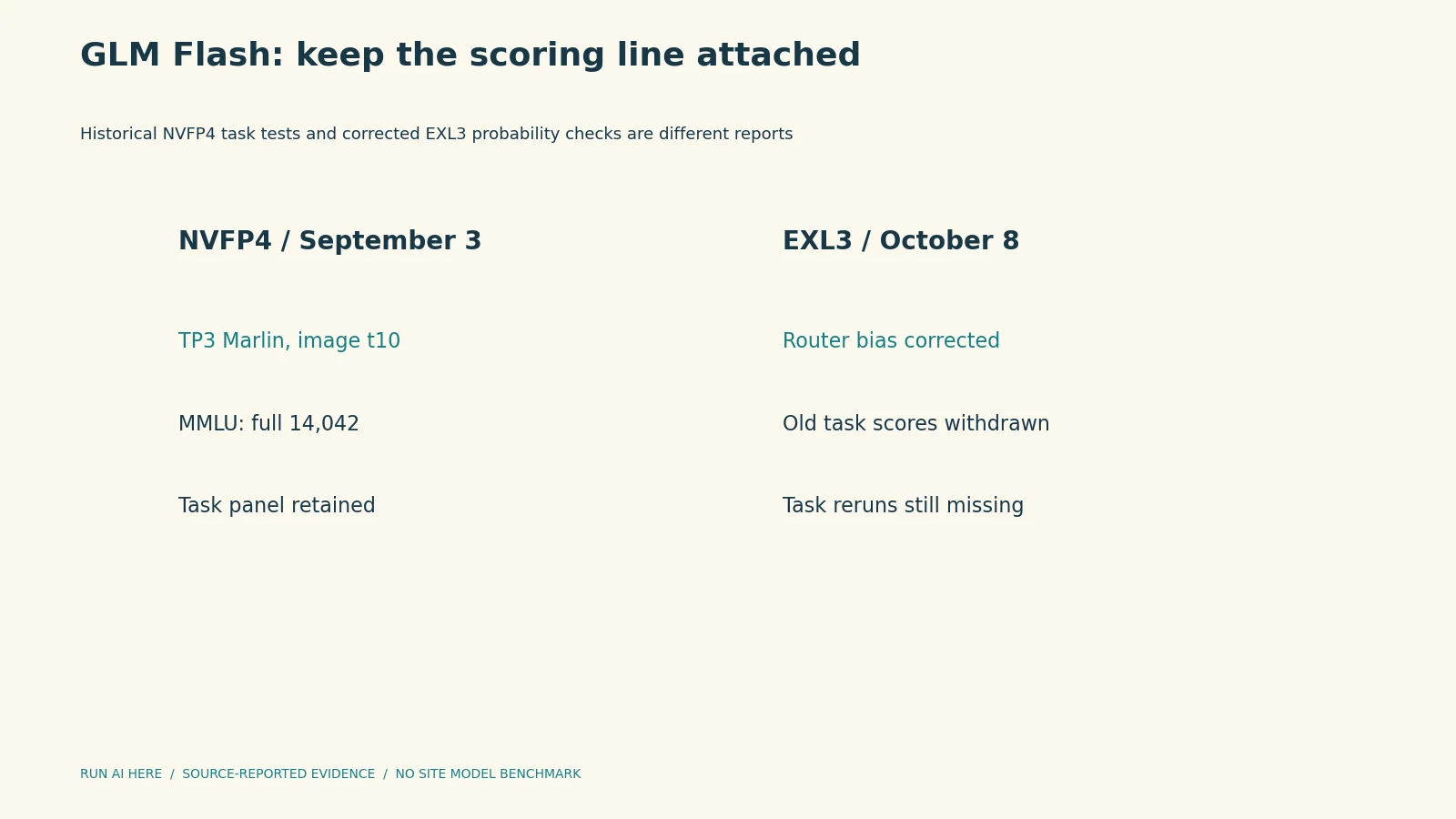
Separate a full historical MMLU run and small task subsets from the corrected EXL3 router stack, whose old task scores were withdrawn and await reruns.
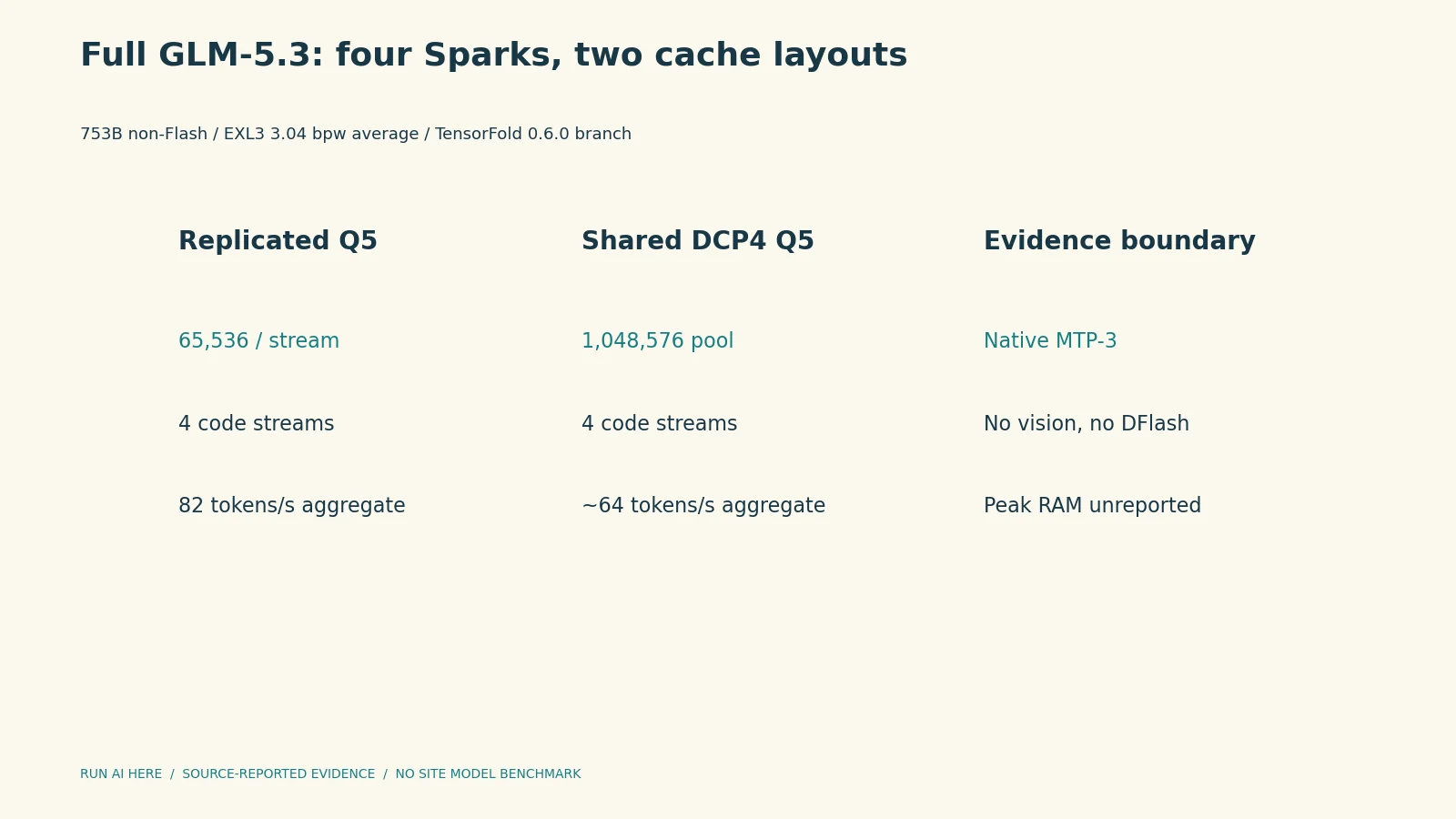
Audit the 753B non-Flash EXL3 TP4 recipe, replicated and shared Q5 cache, million-token retrieval, BF16-reference fidelity and later RDMA fixes.
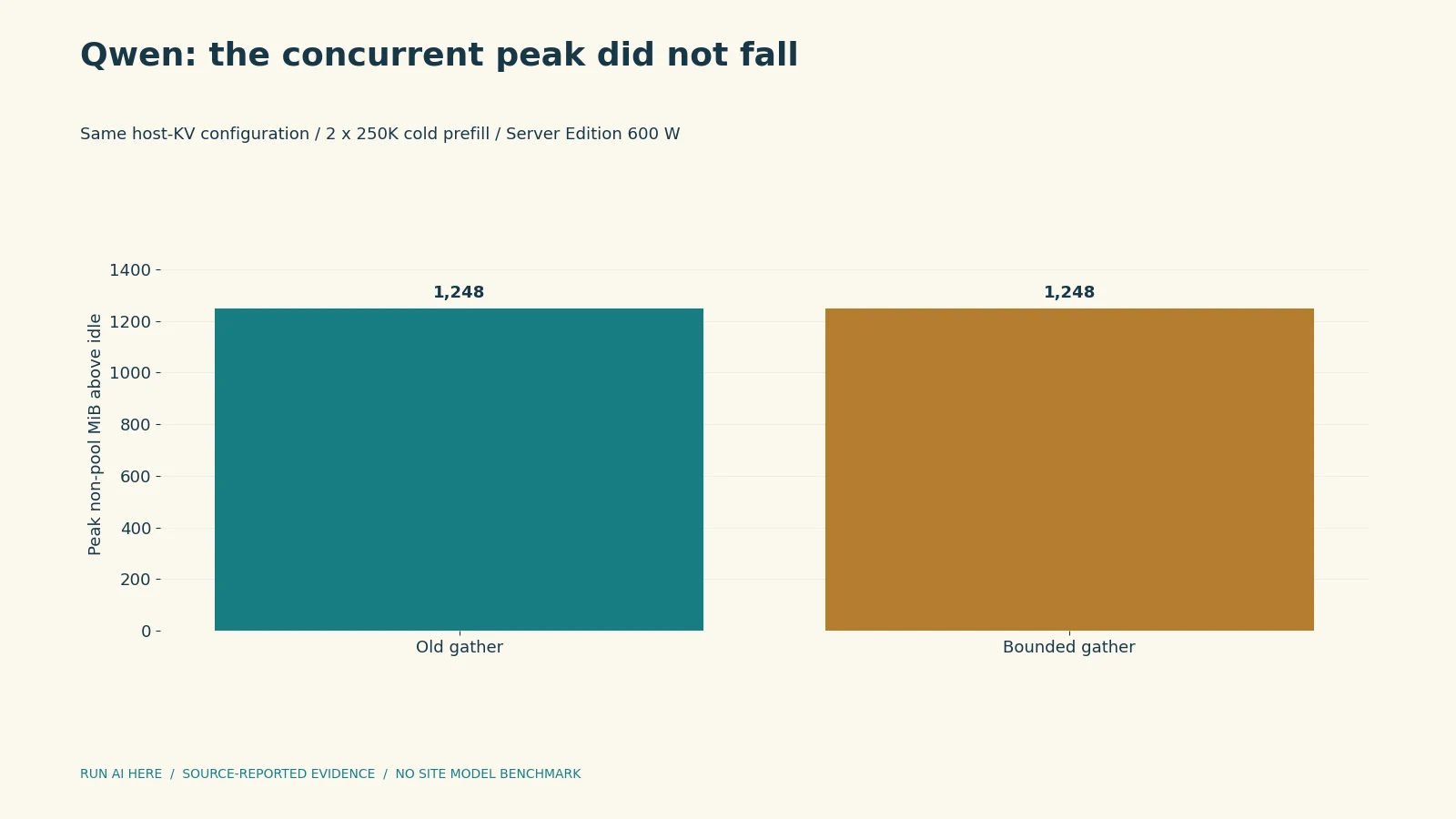
Read two 250K-request memory controls, a 500K single-request peak, a production OOM and invalidated/repeated recovery tests without mixing hardware or cohorts.
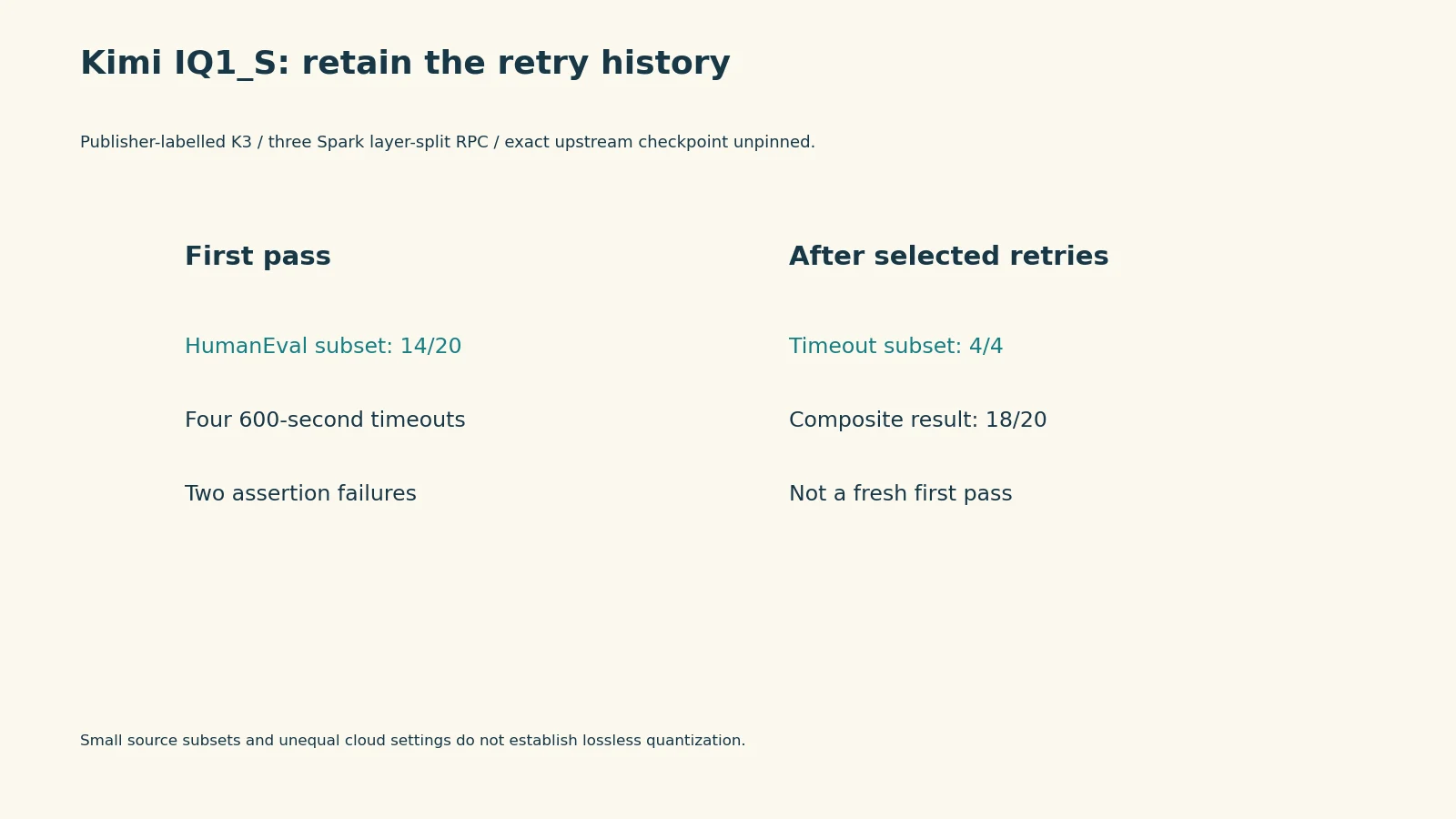
Audit a publisher-labelled K3 layer-split deployment, approximate memory and small GSM8K/HumanEval subsets, retaining first-pass failures and timeout retries.
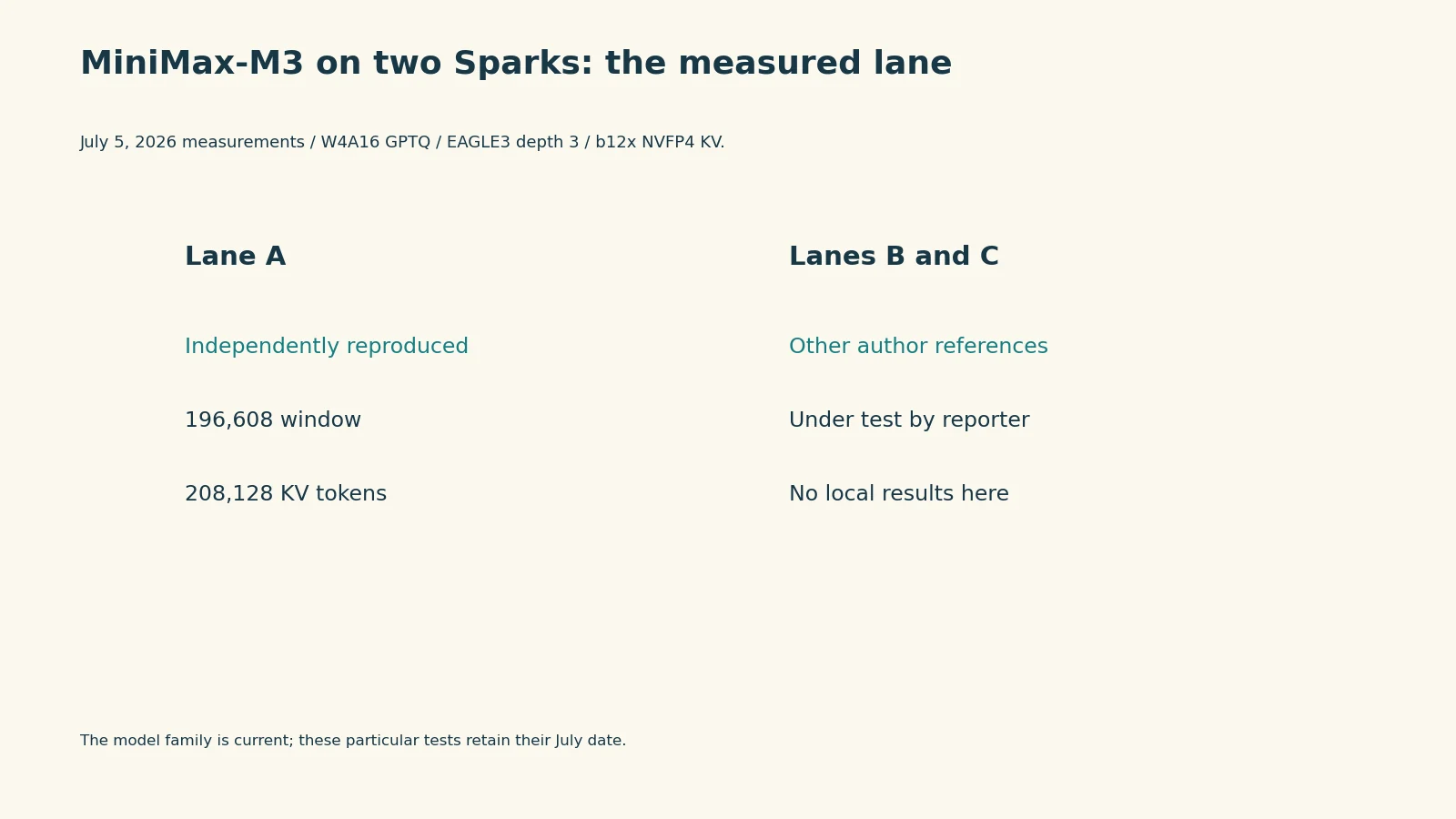
Separate a July lane-A reproduction from proposed speed/context recipes, retaining request timing, startup memory brackets and a negative NCCL result.
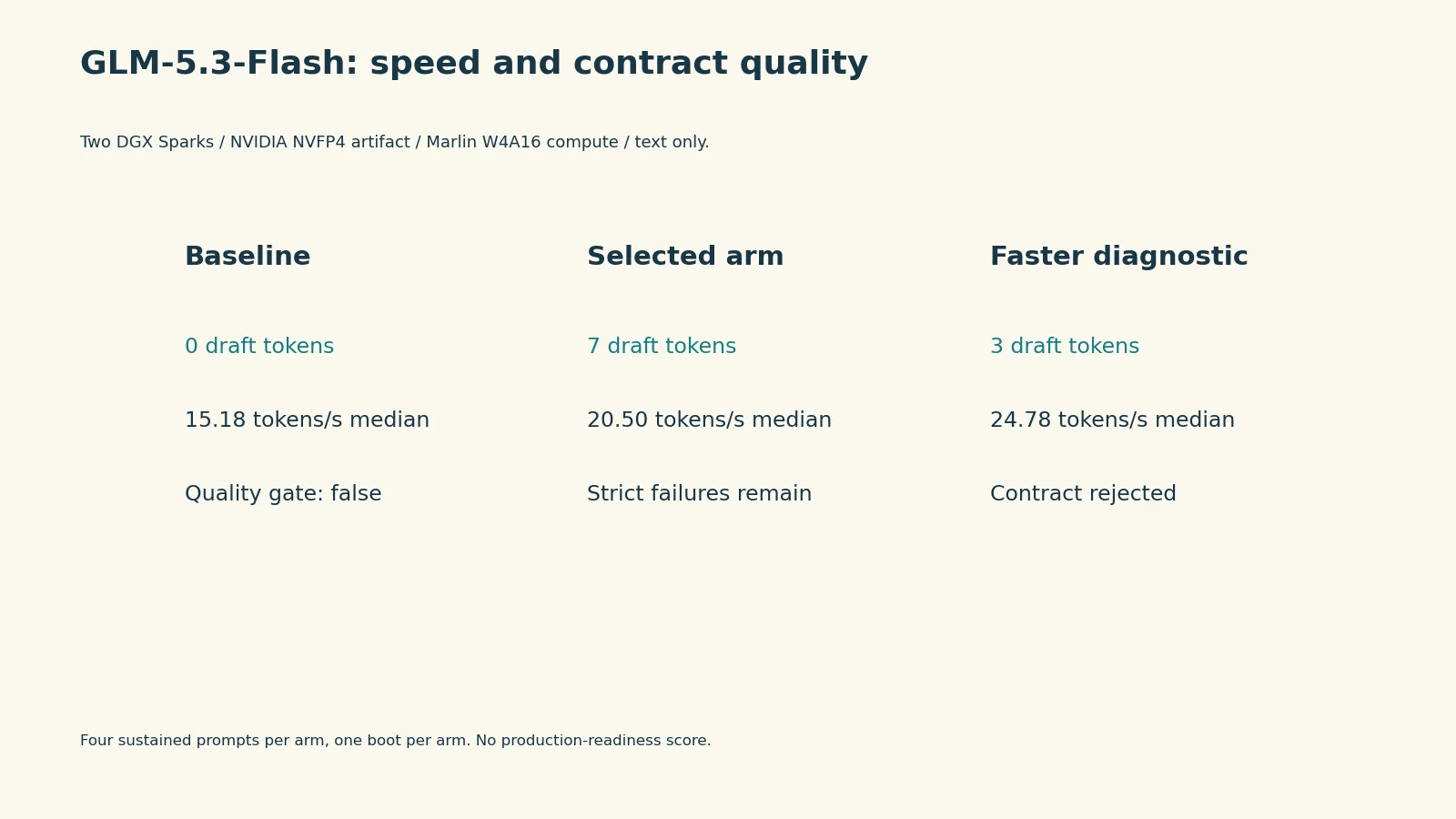
A pinned NVFP4 target, DFlash2 draft and community image reach sustained decode and 120124-token retrieval, while strict output failures remain visible.
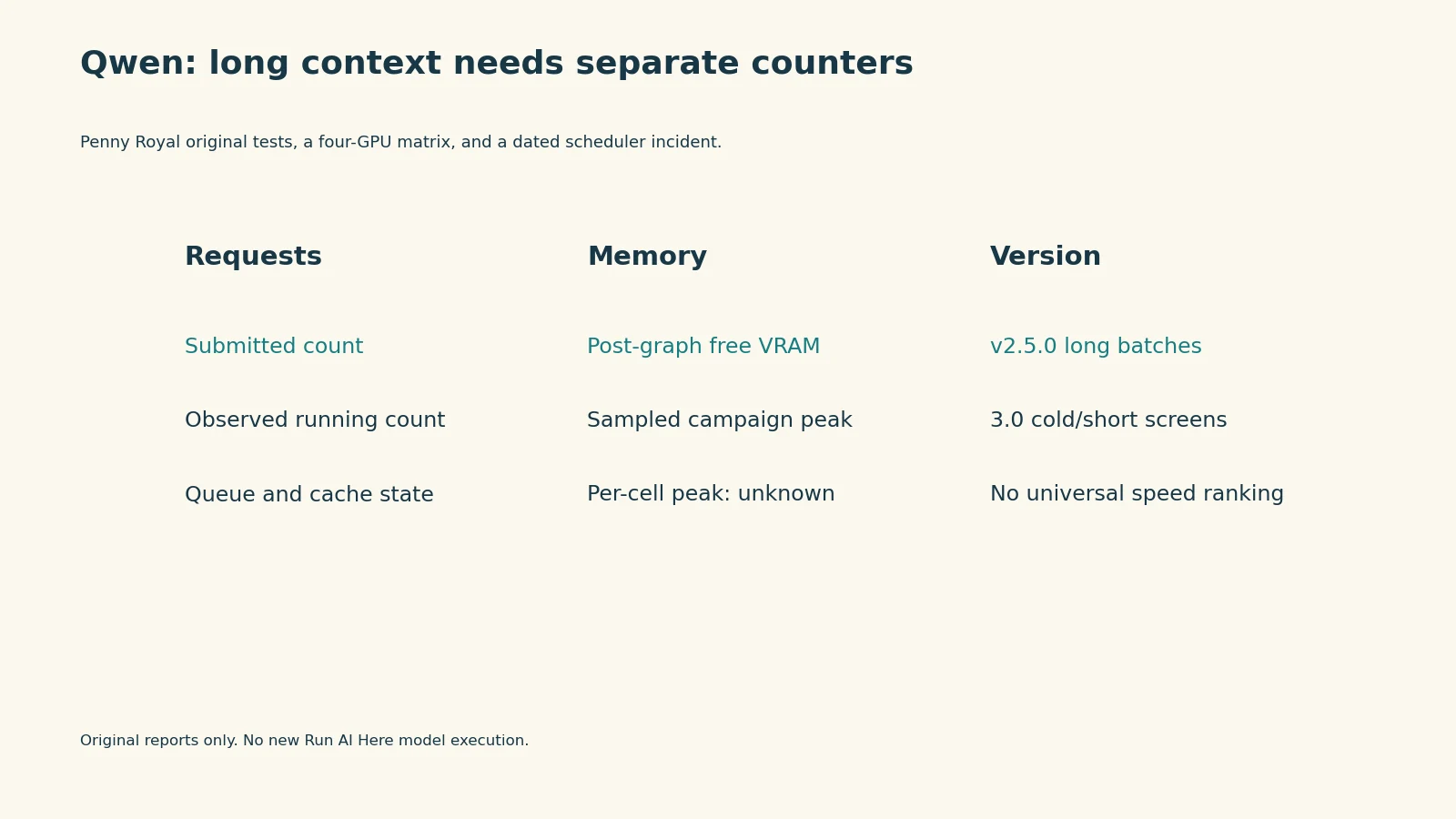
Read 128K and 490K Qwen batches, a four-GPU 128K matrix, sampled peak VRAM and a Mamba crash with original versions and measurement limits.
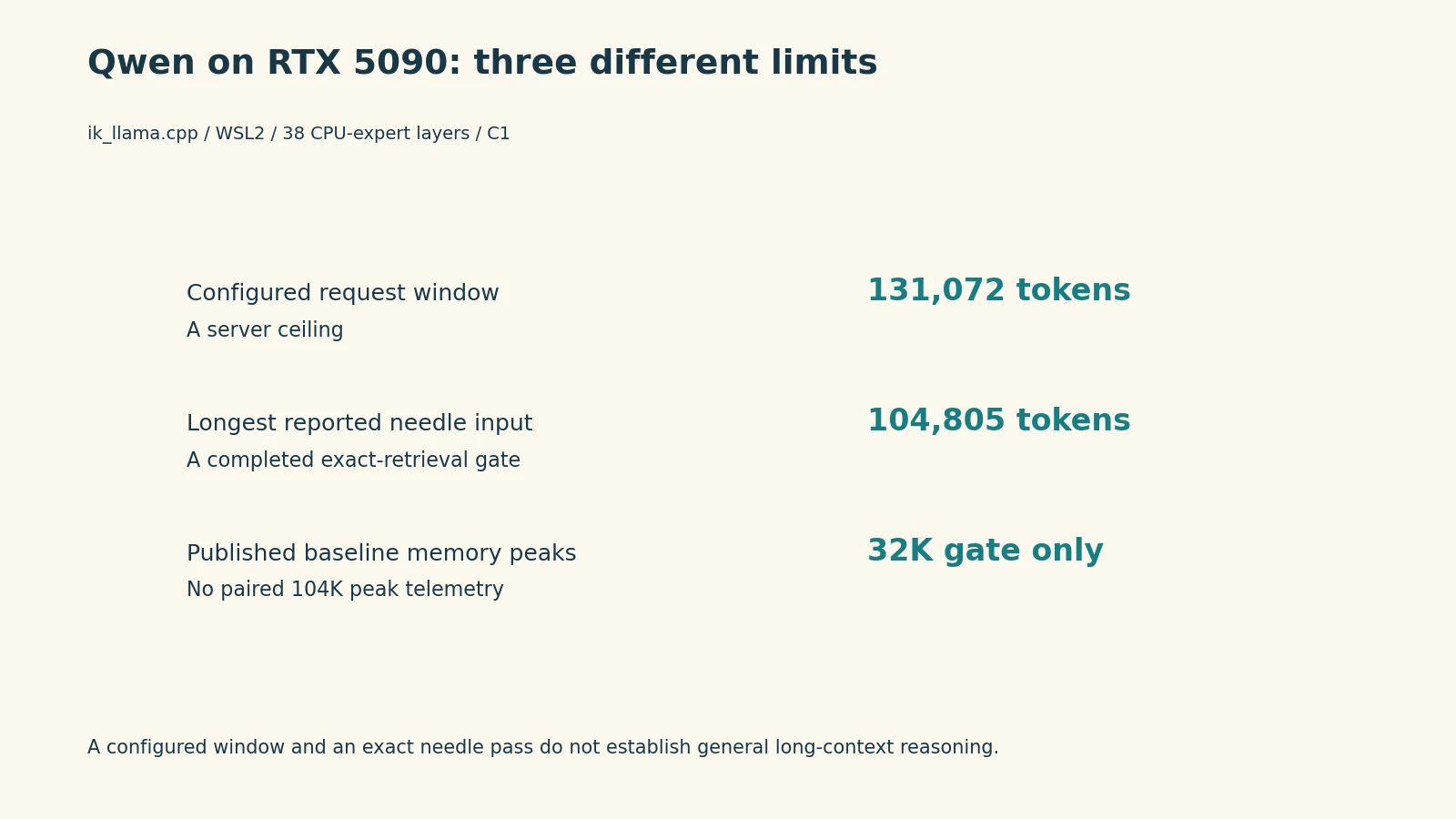
Understand a 104805-token Qwen retrieval, 32K-only memory telemetry and rejected MTP promotion on an RTX 5090 with WSL2 and partial CPU expert offload.
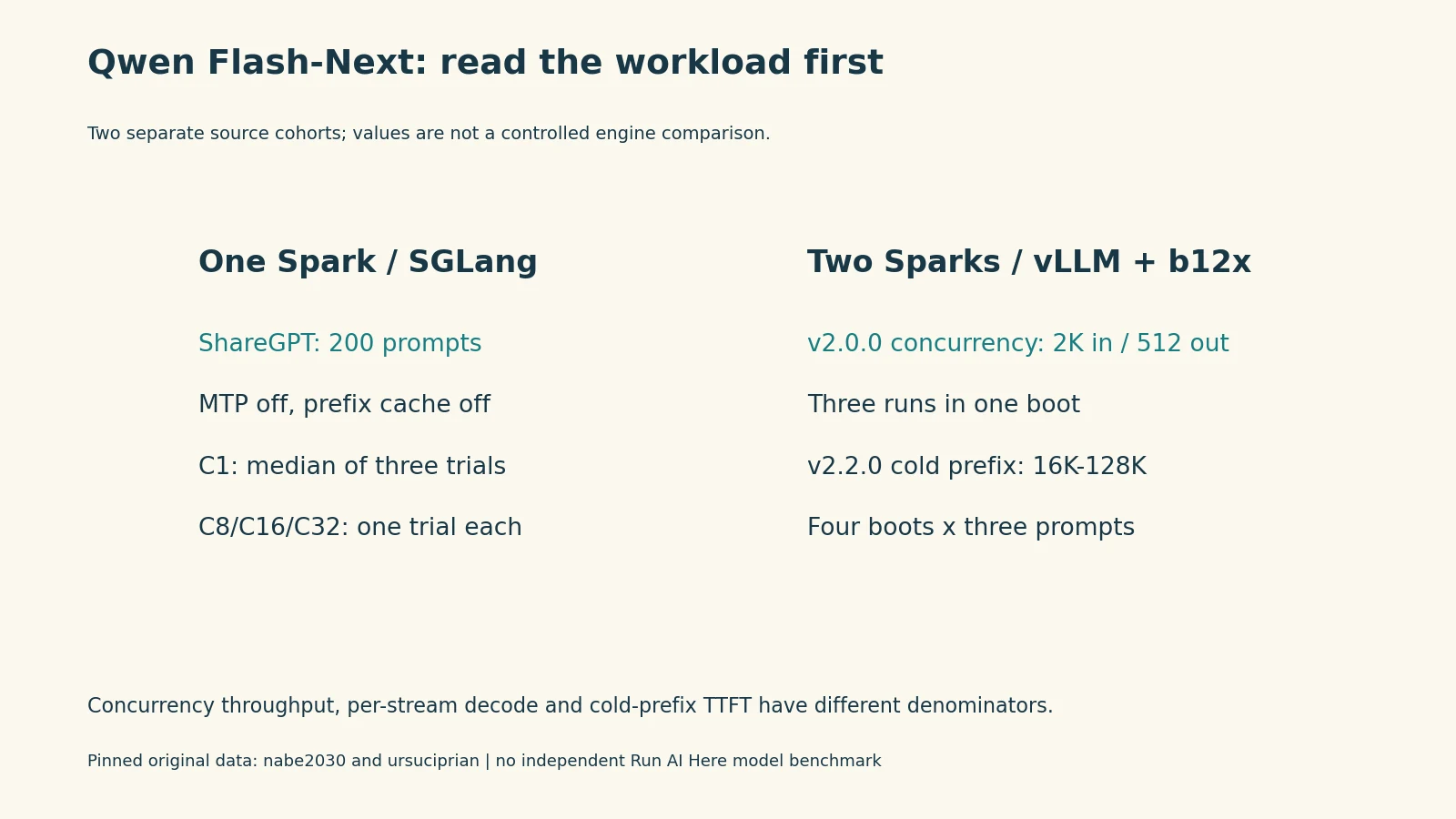
Read Qwen Spark concurrency, per-request delay and cold-context evidence, keeping checkpoints, releases, cache settings and memory failures distinct.
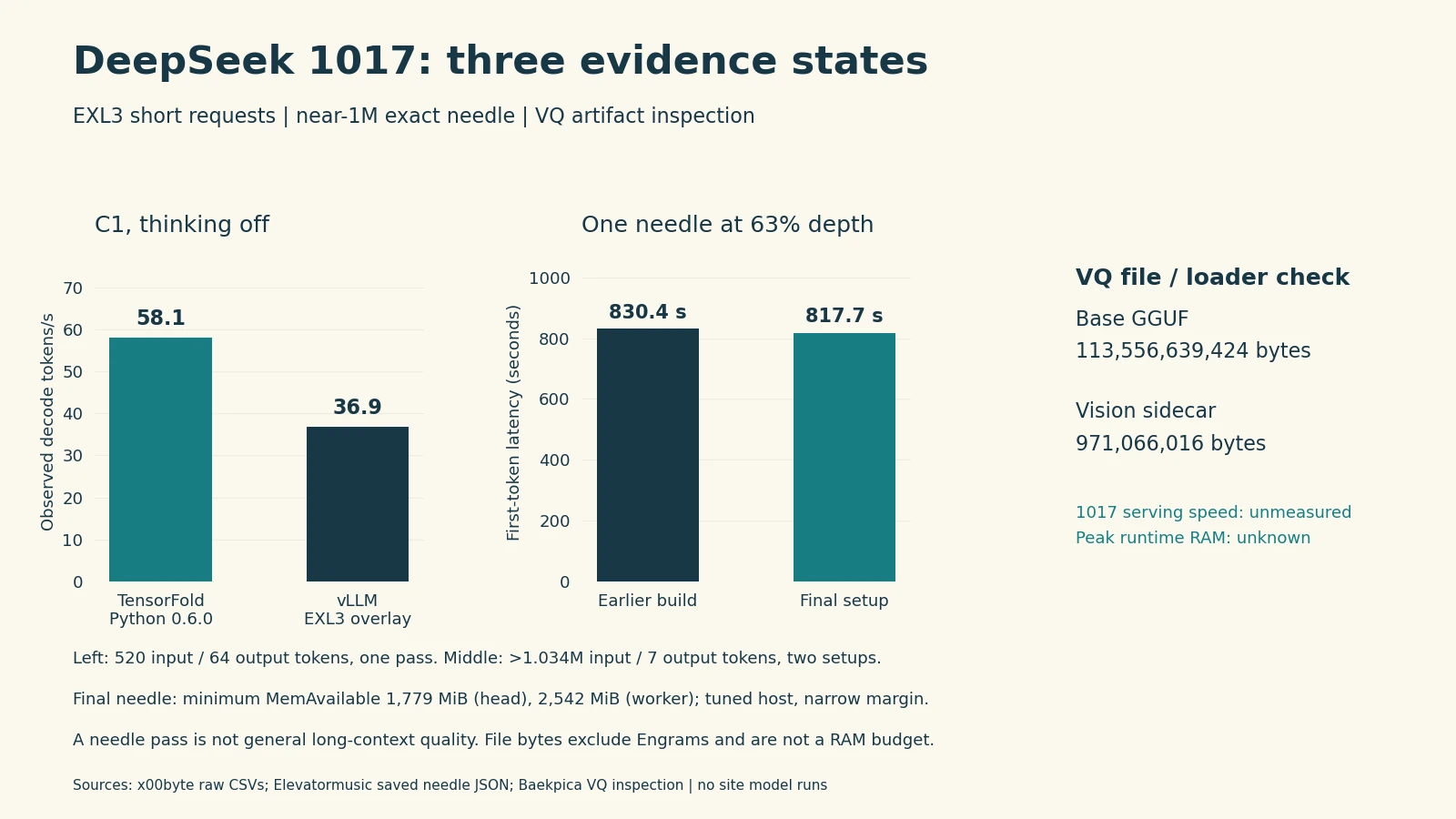
Separate a short EXL3 deployment matrix, two near-million-token needle checks and a VQ conversion that has not measured 1017 serving speed.
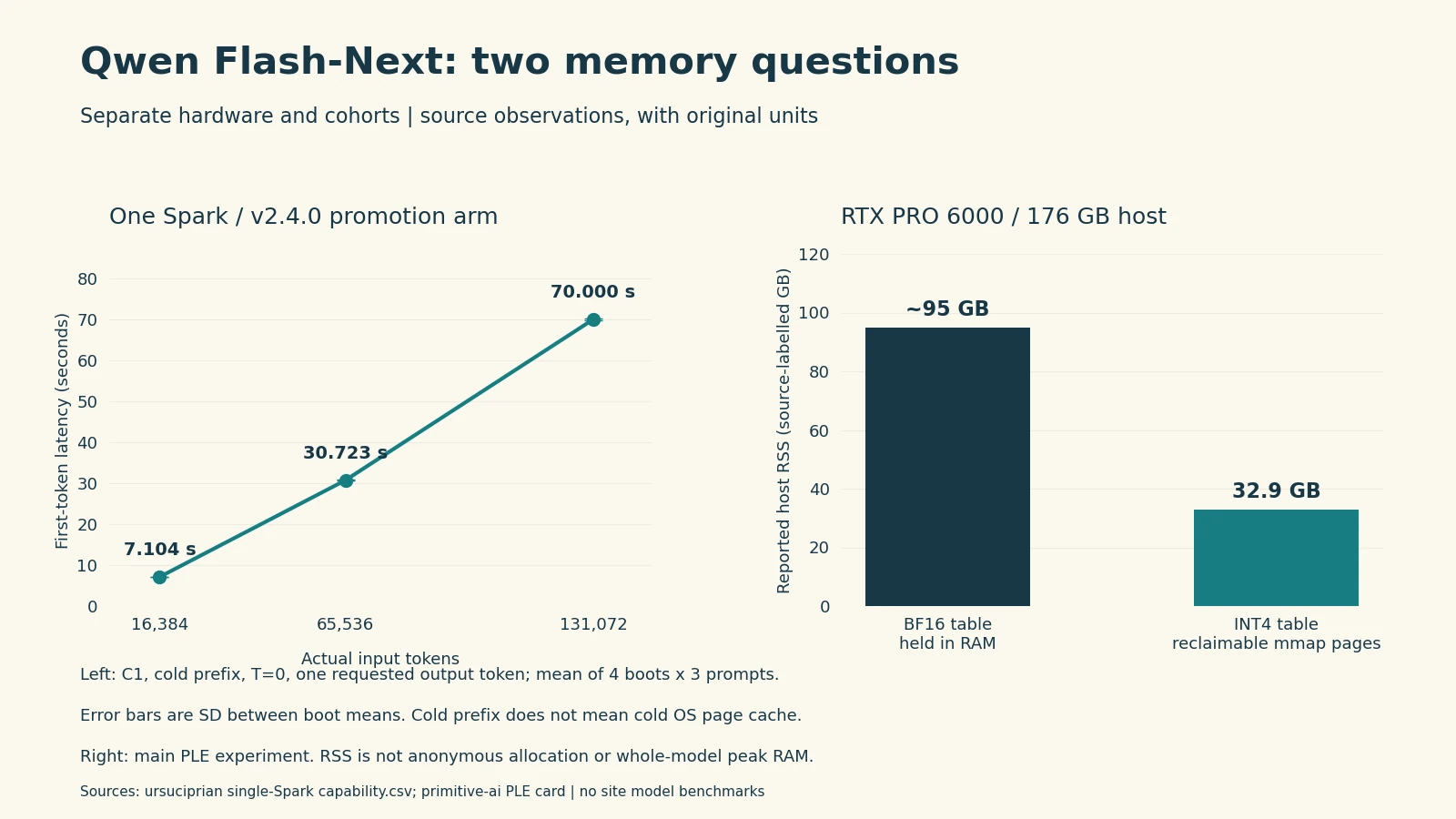
Read a single-Spark cold-context study and a separate PLE-memory experiment, preserving hardware, builds, memory types and unmeasured limits.
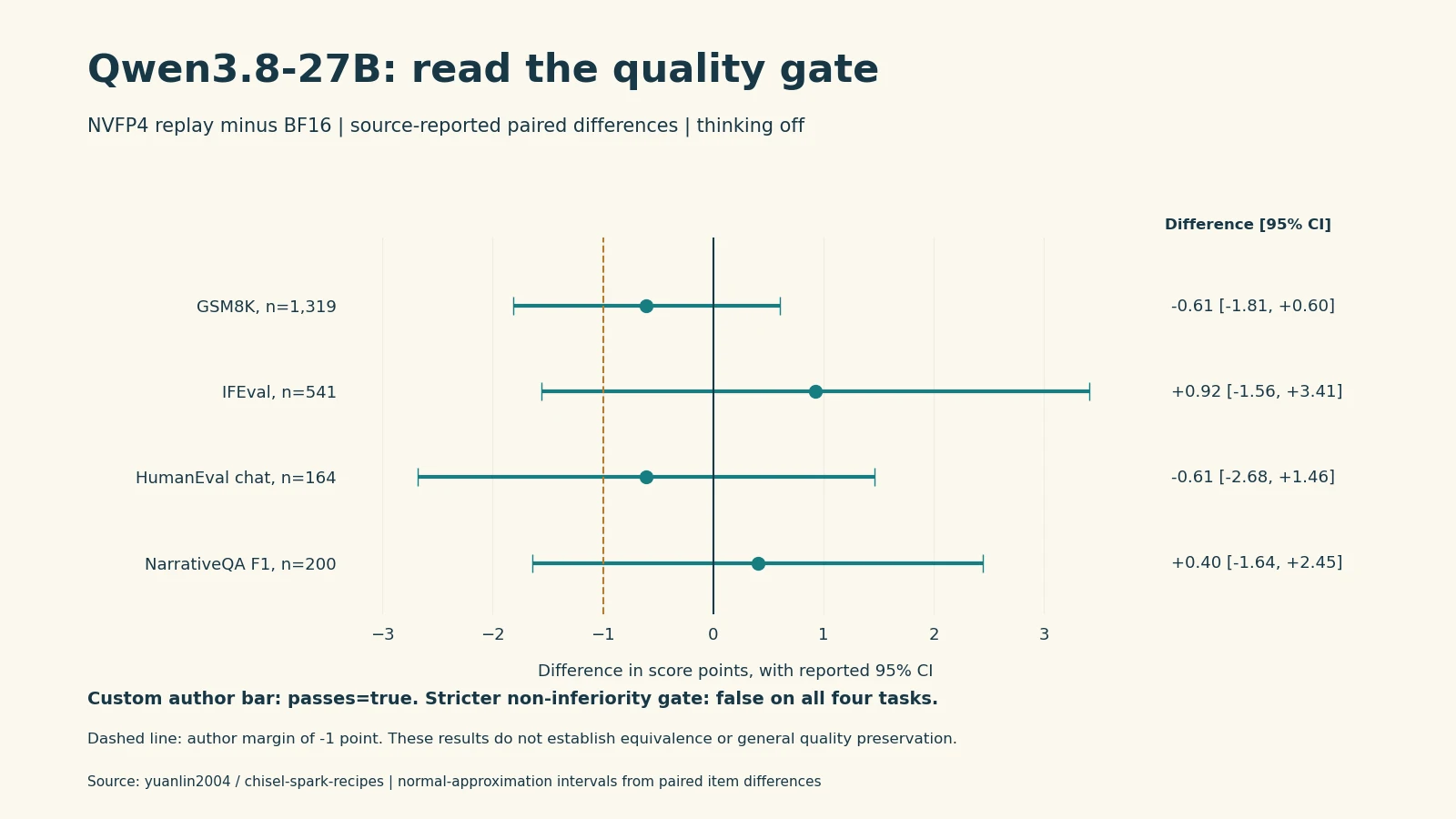
Read the local serving recipe, workload-specific timing and paired BF16 quality comparisons, including the limits hidden by a simple pass flag.
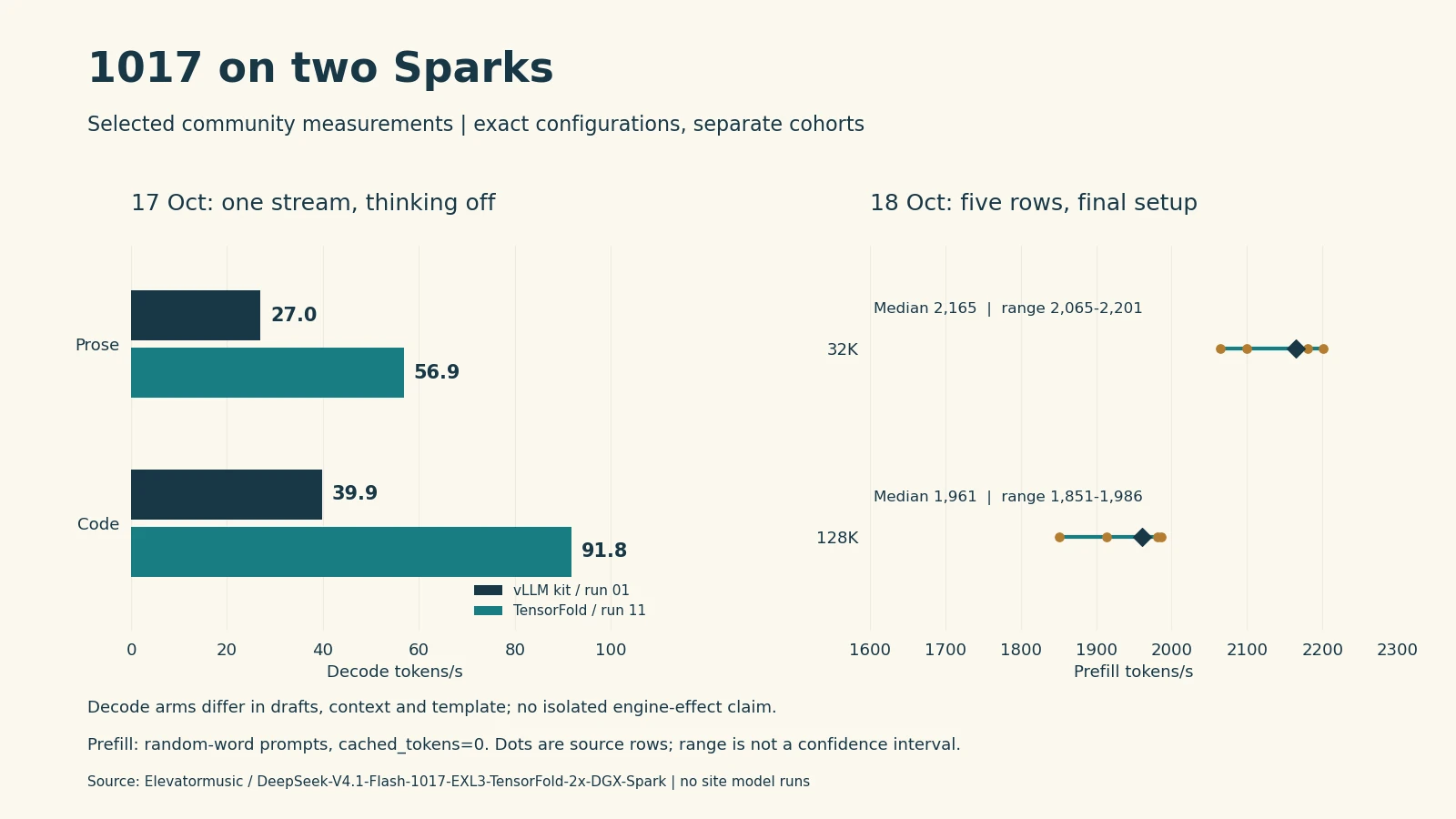
Read the exact 1017 artifact, two historical engine configurations and a separate final prefill cohort, with original results and missing conditions.
Read four attributed GB10 incidents with exact model revisions, historical build conditions, evidence states, proposed changes and verified follow-ups.
Choose a runtime by artifact, backend, API and workload, with four pinned maintainer references and explicit checks before deployment.
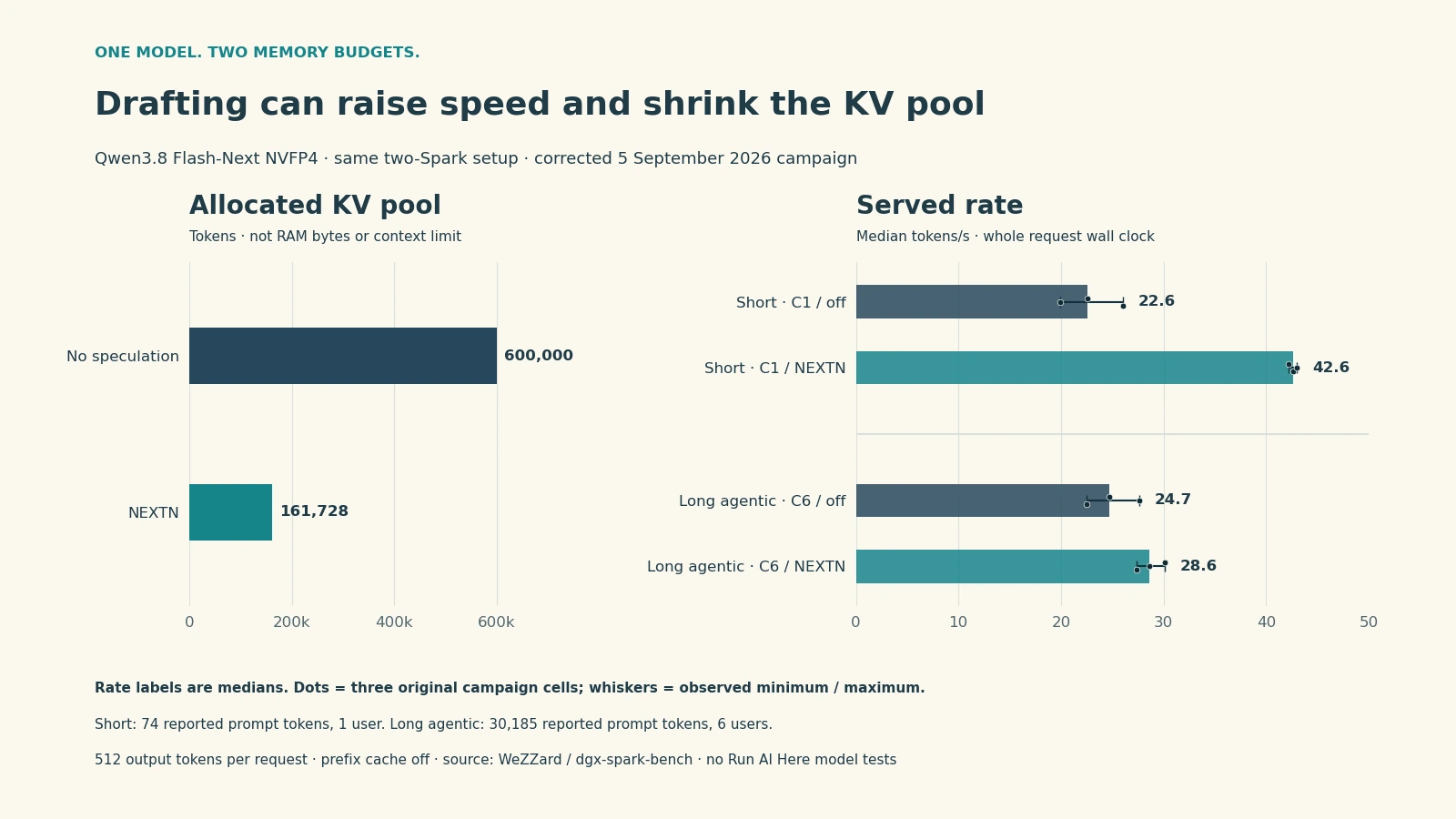
Read a same-model two-Spark comparison with allocated KV pools, twelve original campaign cells and explicitly derived rate summaries.
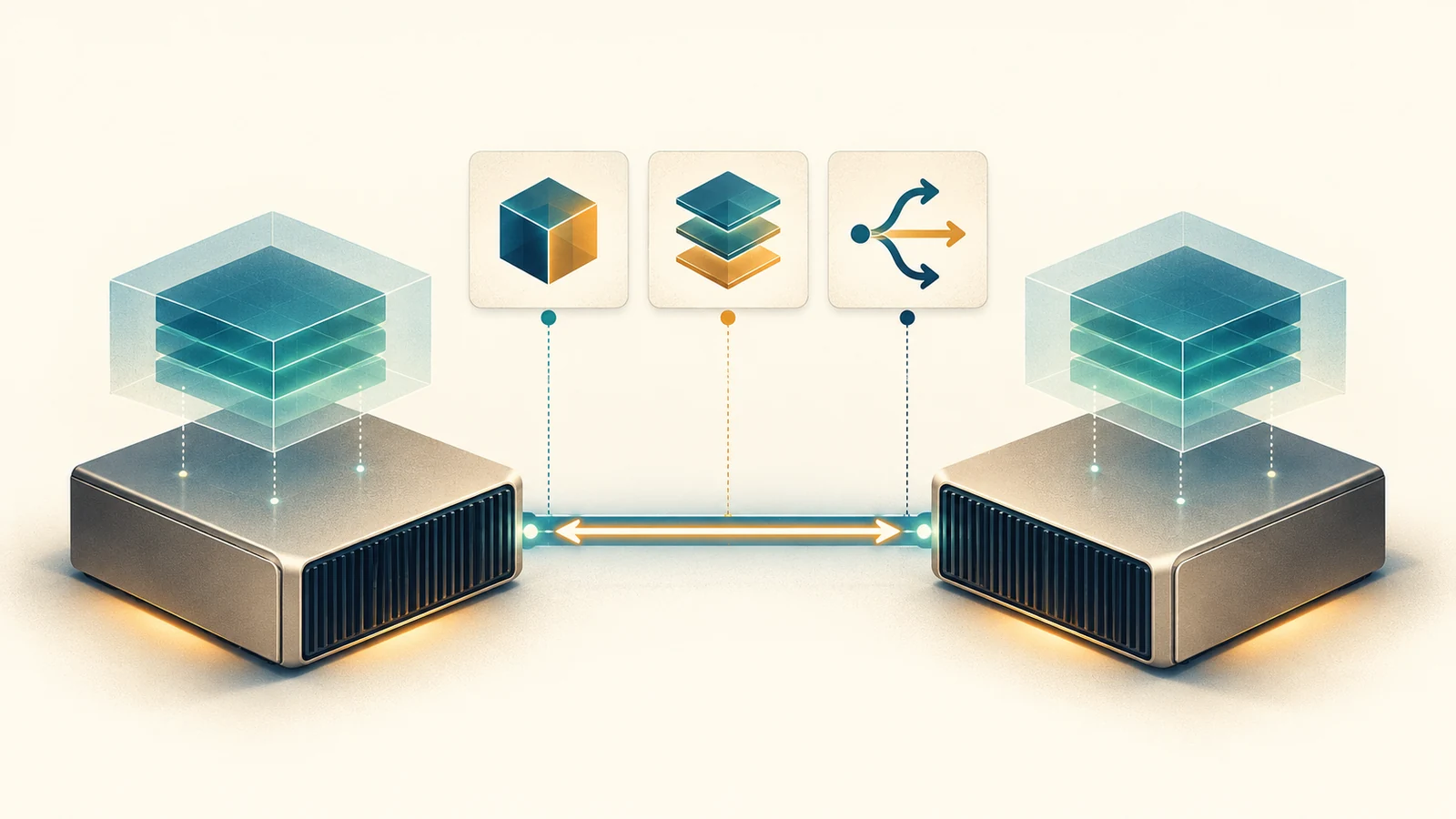
Read three community launch profiles with artifact revisions, KV pools, speculation, context limits, actual concurrency and transport checks.
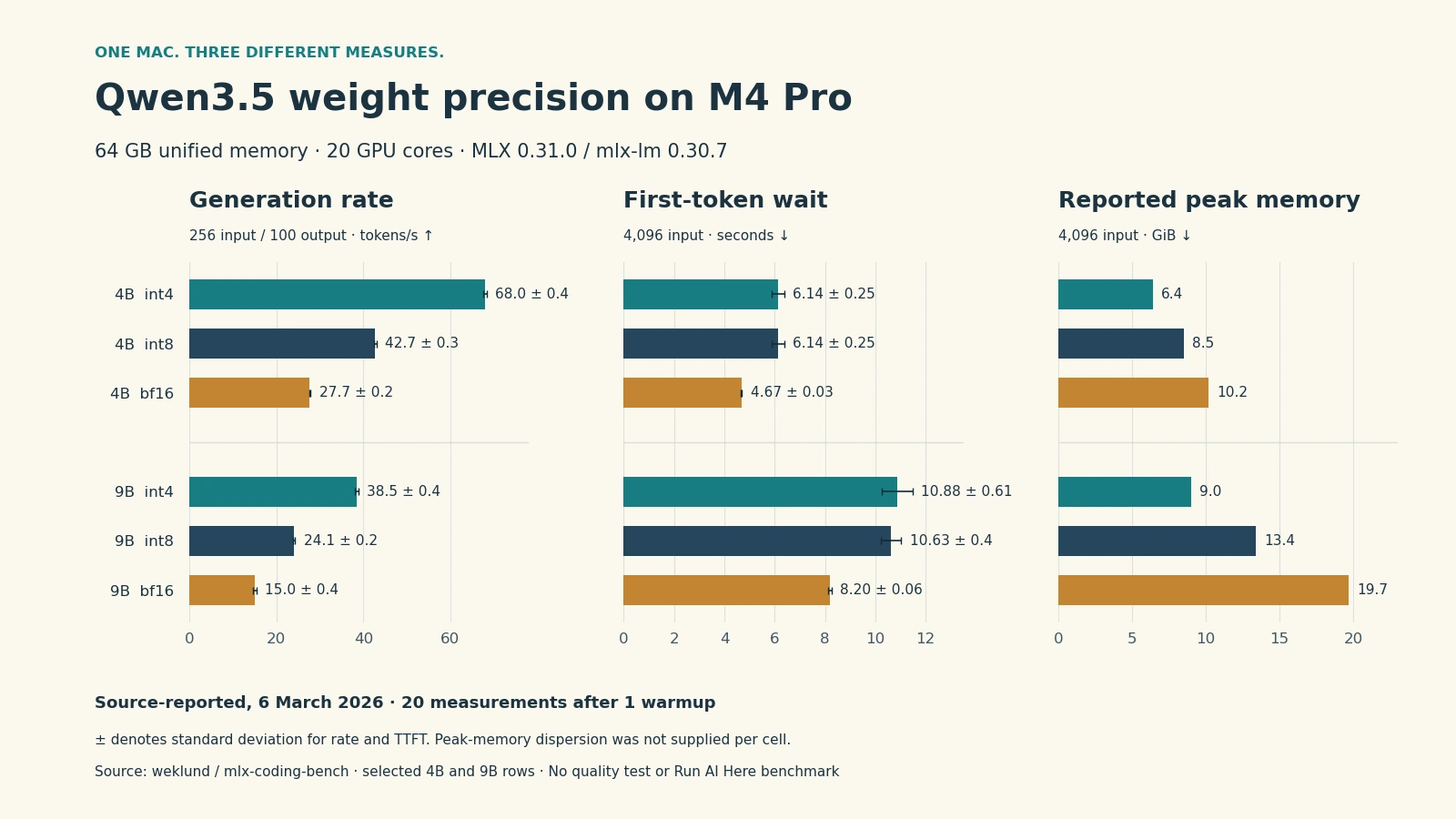
Compare Qwen3.5 4B and 9B weight formats on one M4 Pro, with separate workloads for generation, first-token delay and peak memory.
Choose the exact conversion, preserve the runtime qualification and resolve hardware, context, cache and optional features together.
Identify the exact 1017 checkpoint, resolve the vLLM recipe and keep publisher recommendations separate from measured capacity.
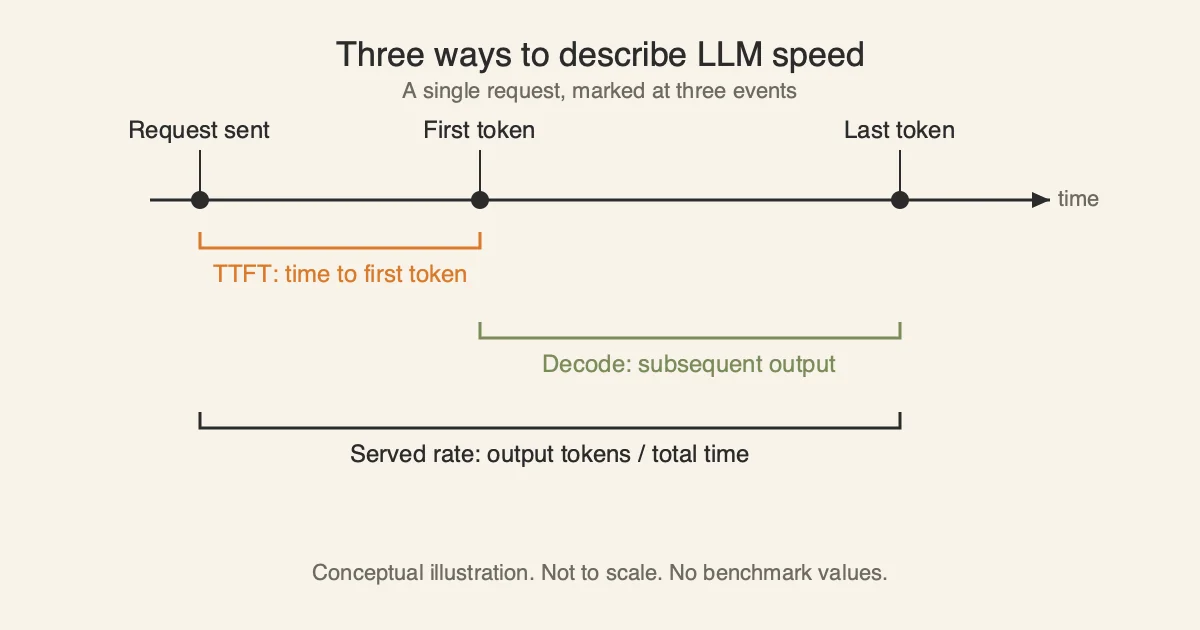
Understand the clock behind a speed claim with three attributed community examples, exact workloads and separate timing definitions.
Optional Google Analytics helps us understand which sources and tools are useful. It stays off unless you allow it. You can change your choice at any time. Read our privacy notice.